The Arc of Leadership™ — Ascent Part II

Identity, Science, and Becoming

College was the doorway I had been running toward my entire childhood. Growing up, very few people in my immediate family went to college. Some of my older cousins did, and I knew I was supposed to follow that path, but no one around me was quite sure how. My high school teachers and counselors were supportive enough, but I don’t think they saw me as “college material.” I wasn’t in the college‑prep track. I wasn’t groomed for it.

But I knew.

I knew because of the years after my parents divorced, when we went from stable to poor almost overnight. We lived in a series of small apartments, eventually landing in a place I still call “the slum.” The people were beautiful — some of my sister’s closest friends came from that time — but the poverty was real. My mother worked endlessly. My father paid minimal child support. And yet, through all of it, there was love, and there was the example of hard work.

Those years taught me that education was the only way forward.

So when the acceptance letter from the University of Connecticut arrived — thick envelope, lilac-scented air, sunlight hitting the side of our tiny rented house — it felt like the universe cracked open. I can still smell the lilacs. I can still feel the weight of that envelope in my hands. It was the happiest moment of my young life. I knew my direction had changed.

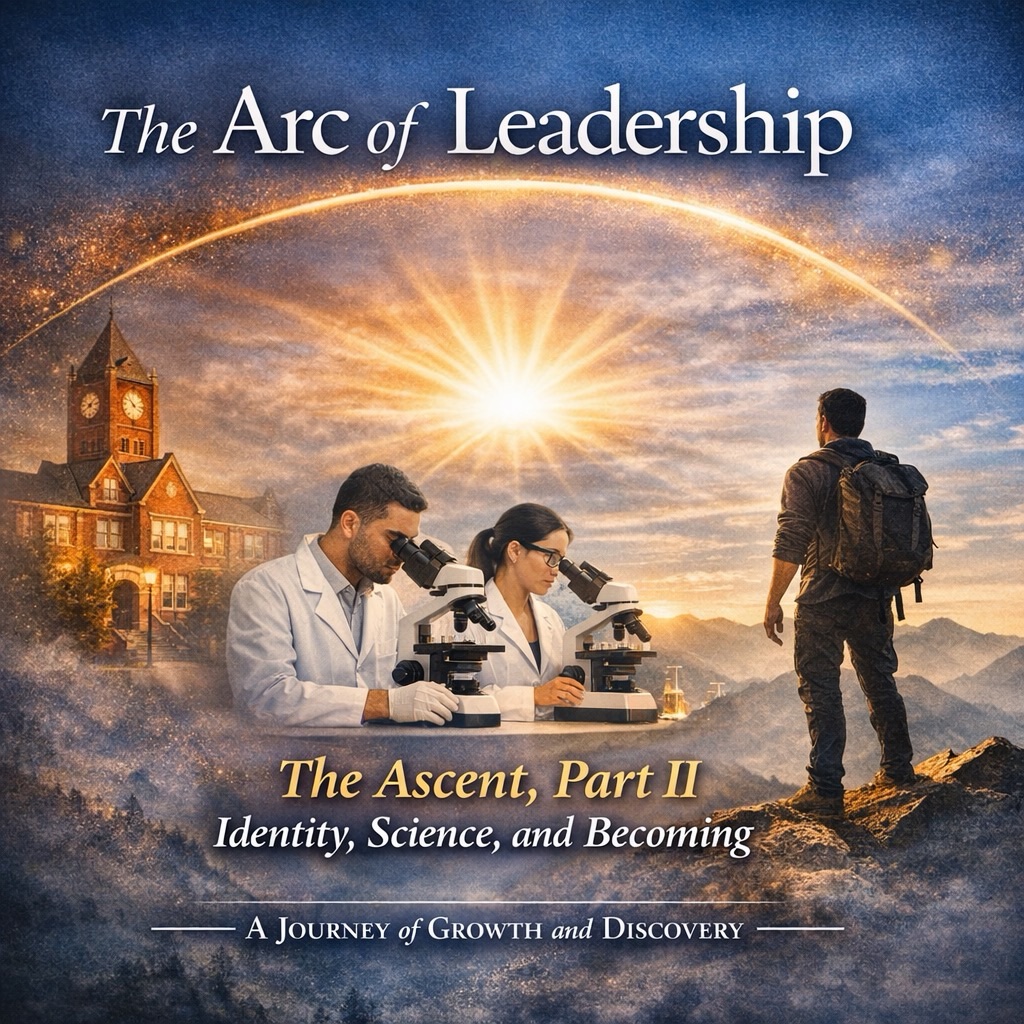
College was a world of expansion. New friends, new freedoms, keg parties in the hallway, sweaty dorm dances, and the exhilarating terror of taking academics seriously for the first time. I studied hard — harder than I ever had — because I was determined not to fail. I started in nutrition, then shifted to medical technology, drawn to the precision of lab science and the way the body reveals its secrets through values, patterns, and anomalies. I didn’t know it then, but this decision would become the backbone of my entire career in clinical research.

Leadership found me early. I became president of my dorm, then a Resident Assistant, then president of my fraternity, Alpha Phi Omega — a national service fraternity rooted in scouting, service, and community. APO was formative. It gave me lifelong friends, purpose, and my first real taste of leading people who wanted to make a difference.

By junior year, I became a Resident Assistant. By senior year, I was elected president of APO after a full campaign — door-to-door conversations, vote counts, strategy sessions. It was my first real experience influencing a group toward a shared vision. I didn’t know the term “servant leadership” yet, but I was already living it.

After graduation, I entered the medical technology internship at Hartford Hospital — a rigorous year of lab rotations, blood draws, and hands-on science. It was intense, demanding, and deeply satisfying. I stayed on part-time in the pharmacy research department, where I was exposed to Phase I studies in healthy volunteers. I even served as a volunteer myself — something that would never be allowed today. It was my first glimpse into clinical research, and it lit something in me.

I went back to UConn for graduate school in biopharmaceutics. My girlfriend at the time, Judy, returned to finish her degree and became a Resident Assistant herself. I became an Assistant Hall Director — my first experience leading leaders. Each RA had sixty residents. I was responsible for the people responsible for the people. It was the earliest echo of the director roles I would hold years later. My CliftonStrengths — Strategic, Learner, Achiever, Maximizer, Positivity, Relator — were already alive in me, even though I didn’t yet know their names. I loved mentoring those young leaders. I loved watching them grow.

But something deeper was shifting.

Judy and I had lived together for years, but now we were on opposite sides of campus. She was thriving in her dorm community. I could sense her connection with someone there. I tried to save the relationship — even planned a romantic evening with candles and a bubble bath — but something was off. We both felt it, even if we couldn’t name it. Not long after, in the Huskies Café, she ended things. I was heartbroken, confused, and unsure of myself.

And then I met John.

We met at Gold’s Gym. I had noticed him before — attractive, confident, magnetic. One day, after working out, we crossed paths in the locker room. A brief touch, a spark, a jolt of electricity that ran through my entire body. It was the first time I felt the truth of myself so clearly.

We met for lunch near our workplaces — Hartford Hospital for me, his company just a block away. We walked to a quiet courtyard of an old building, sat on the steps, and he asked if I had ever kissed a man. I hadn’t. So he kissed me.

It was gentle, lingering, sweet — and utterly life-changing.

In that moment, I knew.

Not tentatively.

Not with confusion.

With absolute clarity.

I was gay.

I was alive.

I was myself.

John told me about an opening at his company for a CRA. I applied. They tried to dissuade me because of the travel, but for me, the travel was the selling point. I got the job. I chose it over finishing my thesis — a bittersweet but perfect decision. It launched my career.

Those early CRA years were extraordinary. I traveled constantly — sometimes two weeks at a time — visiting investigators across the country. San Francisco became a second home, a place where I worked hard by day and explored my identity by night. Every city offered both professional growth and personal awakening. I learned the craft of monitoring from seasoned CRAs. I learned the discipline of science. I learned the responsibility of human subjects research.

In October 1992, I traveled to Washington, D.C. for a monitoring visit and found the AIDS Memorial Quilt covering the National Mall. Panel after panel. Name after name. Lives lost. Futures stolen. I walked among them and sobbed — openly, uncontrollably. The grief was overwhelming.

And yet, that same weekend, I danced all night at a circuit party, Martha Wash belting “It’s Raining Men,” joy pulsing through the room. It was a strange, impossible juxtaposition — fear and joy, grief and celebration, death and aliveness — coexisting in the same breath. That was the reality of being a gay man in the early ’90s.

The quilt changed me.

The community changed me.

The activism changed me.

It deepened my commitment to research.

It made the work personal.

It made the science sacred.

I saw medical records of people with AIDS. I saw the suffering. I saw the suicides. I saw the urgency. And I knew I wanted to be part of bringing treatments to people who needed them.

I worked for that company for four years, very hard, loved it, loved every single minute of it.

Professionally, I proposed the first regional CRA role at my company — a strategic move that saved money and allowed me to relocate to Miami. It worked. It opened doors. It set the stage for the next phase of my ascent.

Work eventually brought me to Florida — Orlando, then Miami, then Key West — where I met my first boyfriend, Orlando, and became a stepfather figure to his two daughters. After that relationship ended, I moved to Miami Beach, lived freely for a short time, and then met Juan at the Westend bar.

“Meet your best end at Westend,” they said.

And I did.

That was the beginning of our thirty-year story.

This chapter — college, leadership, heartbreak, awakening, science, travel, community, purpose — was the making of me.

It was the moment the boy with the flashlight became the man with the protocol.

The moment my identity, my vocation, and my leadership philosophy all ignited at once.

The moment my Ascent truly began.

Closing Reflection: The Moment You Began Becoming

Take a quiet moment. Let your breath settle into a natural rhythm.

  1. Bring to mind a time when your life was shifting — when you were stepping into a new identity, a new truth, or a new direction.

Notice what that moment felt like in your body.

  1. Ask yourself: What part of me was emerging then?

What new truth was rising, even if you didn’t yet have the words for it?

  1. Recall the people, mentors, or experiences that helped you cross that threshold.

Who believed in you? Who challenged you? Who opened a door?

  1. Place a hand on your heart and acknowledge the courage it took to step forward.

Let gratitude rise — for the journey, for the lessons, and for the person you were becoming.

Take one more breath.

Return gently to your day.

The Arc of Leadership™ — Ascent Part I

The Shape of a Life Begins in the Dark

Most leadership stories begin in adulthood — with a first job, a first promotion, a first title. But mine began much earlier, long before I knew what leadership was, long before I had words like responsibility or initiative or visibility.
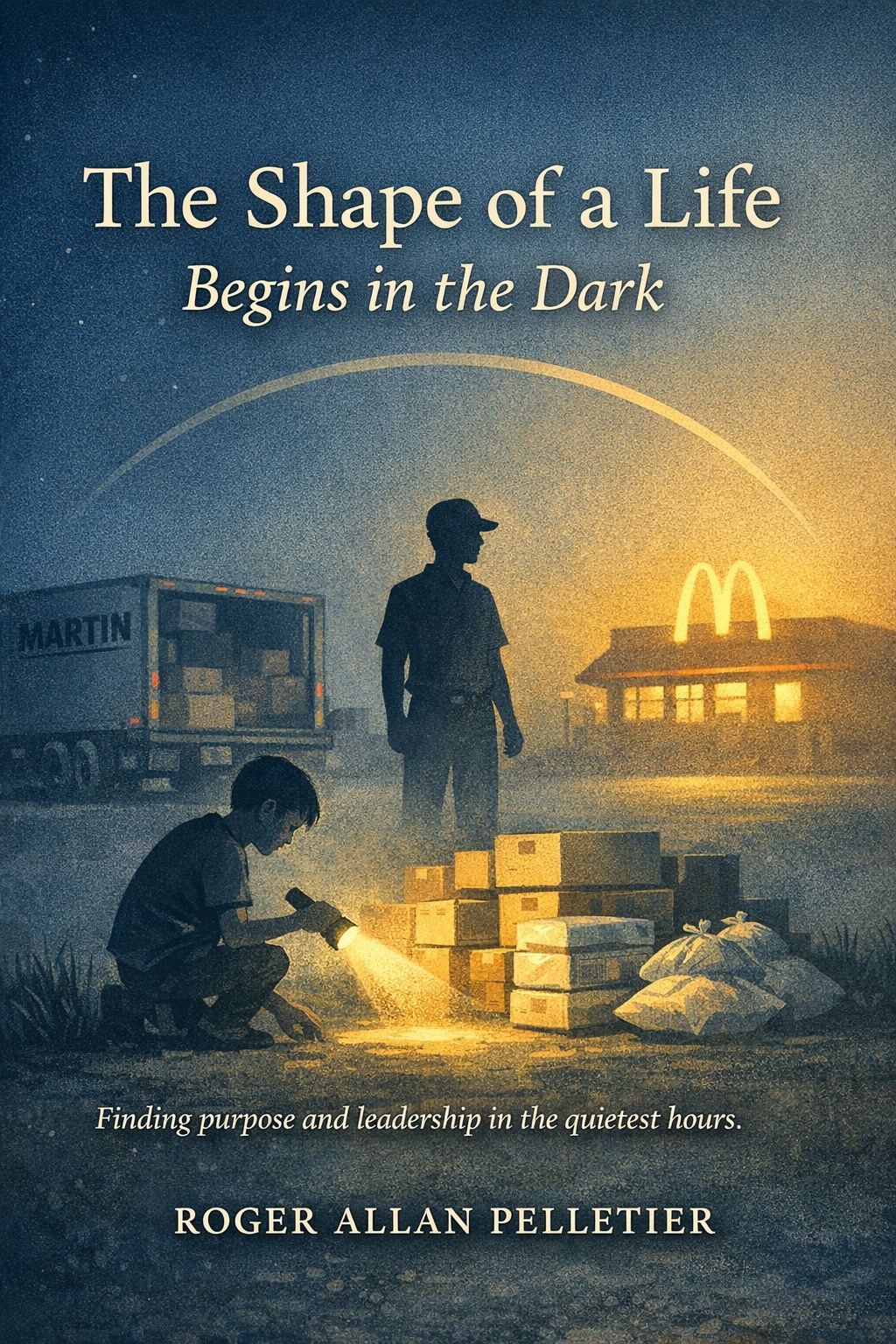
My story begins in the dark, in the rain, with a flashlight in my hand and my father beside me.
I was six or seven years old the first time he woke me in the middle of a stormy night. The rain had softened the earth, and he told me this was the perfect time to find nightcrawlers. We stepped outside into the wet grass, our flashlights cutting thin beams through the darkness. The ground shimmered with possibility. And there, rising from the soil, were the long, glistening worms that fishermen prized.

We crouched together, quietly, patiently, gently pulling each nightcrawler from the earth before it slipped back into its tunnel. By morning, we had enough to fill a wooden box we lined with plastic and packed with soil. I made a sign — “Nightcrawlers for Sale” — and planted it in the front yard.

That was my first business.


My first taste of earning something for myself.
My first understanding that work could be created, not just assigned.
I didn’t know it then, but that night in the rain was the beginning of my arc — the first spark of initiative, the first moment I realized I could shape my own world.


A few years later, around age eleven, I took on my first real job: a paper route. I remember the weight of the Sunday papers — thick, heavy, wrapped in plastic — and the satisfaction of preparing them, folding them, securing them with rubber bands, and loading them into my bag.


I walked the neighborhood in every season, delivering the news to doorsteps before most people were awake. Once a week, I’d go door to door collecting payment, keeping the proceeds after I paid my bill. It was my first experience with accountability — with earning, managing, and stewarding something that was mine to oversee.


I didn’t have the language for it then, but I was learning the earliest forms of leadership: consistency, reliability, presence.


By fifth grade, leadership began to take on a new shape — one that involved visibility. I became an officer in the school crossing guard program, a lieutenant with a badge and a sense of authority that felt both exciting and humbling. It was the first time I understood that leadership wasn’t just about doing a job — it was about being seen doing it.


In high school, that visibility grew. I ran for office and became treasurer of my senior class. It was my first experience with campaigning, with earning trust, with standing in front of peers and saying, “Choose me.” It was also my first taste of the quiet pressure that comes with being elected — the sense that people are watching, expecting, relying.


These early experiences weren’t glamorous. They weren’t strategic. They weren’t part of any grand plan. But they were forming something in me — a pattern, a rhythm, a truth.
I was becoming a leader long before I ever held a job with “manager” in the title.
And then came McDonald’s.


At fifteen and a half, I stepped into the place where my professional life truly began. I loved the pace, the teamwork, the rhythm of the store. But what I loved most was the trust.


I stayed late into the night to receive the supply truck — cases of french fries, boxes of hamburger patties, cartons of paper goods, refrigerated items stacked on pallets. I counted each cash drawer at the end of the night, prepared deposits, handled the safe, and sometimes drove the deposit to the bank after closing. I made sure the store was clean, that the team felt supported, that customers were happy.
I didn’t know it then, but I was learning operational leadership — the kind that happens quietly, behind the scenes, long after the dining room lights go out.


At seventeen, I became the youngest manager in the region. And yet, even then, I didn’t think of myself as a leader. I simply loved the work.
Looking back now, I can see the pattern clearly:
Leadership kept finding me.


Responsibility kept finding me.


Visibility kept finding me.


Service kept finding me.


I wasn’t chasing leadership — I was becoming it.
And the arc of my life was already forming, long before I knew its name.


This is the beginning of my memoir, The Arc of Leadership — a story not of climbing, but of becoming. Not of rising, but of returning. Not of ambition, but of alignment.


Thank you for reading the first step of this journey. More chapters — and more reflections — are on the way.


Closing Reflection: Finding Purpose in the Dark

Take a slow breath. Let your shoulders soften.
This is a moment for remembering where your own leadership truly began.

  1. Bring to mind a time when you were moving through uncertainty — a season when the path wasn’t clear, but something inside you was quietly forming.
    Notice what that darkness felt like.
    Not as danger, but as possibility.
  2. Ask yourself: What was being shaped in me then?
    What early instinct, responsibility, or truth was beginning to take form long before you had language for it?
  3. Recall the small acts of leadership you offered before anyone called you a leader.
    Moments of care.
    Moments of responsibility.
    Moments when you stepped forward because someone needed you.
  4. Consider how those early experiences shaped your sense of purpose.
    What did they teach you about who you are?
    What did they reveal about the kind of leader you were becoming?
  5. Place a hand on your heart and honor the version of you who led in the dark — without a title, without applause, without certainty.
    That early courage is still in you.
    It is still guiding you.
    It is still shaping the life you are meant to live.
    Take one more breath.
    Return gently to your day.

The Arc of Leadership™

The Arc of Leadership: Why Every Career Deserves a Gentle Landing

Most people describe careers as ladders — a steady climb upward toward greater responsibility, visibility, and reward. But after nearly two decades in global clinical research leadership, I’ve learned that a ladder is the wrong metaphor. Careers don’t move in straight lines. They rise, crest, soften, and return. They teach us, stretch us, and eventually bring us back to a quieter, wiser version of ourselves.
The shape that captures this truth is what I call the Arc of Leadership.


THE ASCENT: CURIOSITY AND BECOMING
Every leadership journey begins with low responsibility and high curiosity. These early years are defined by learning, apprenticeship, and the humility of being new. We say yes to everything. We absorb. We stretch. We discover who we might become.
This is the beginning of the arc — the place where identity is formed and possibility is wide open.


THE CREST: MASTERY, PRESSURE, AND VISIBILITY
At the top of the arc, responsibility peaks. We lead teams, carry weight, and make decisions that matter. It’s exhilarating — and exhausting. The crest is where mastery lives, but it’s also where the pressure is highest. Many leaders spend years here, holding everything together, often at great personal cost.
The crest is powerful, but it is not sustainable forever.


THE DESCENT: TRANSITION AND RECALIBRATION
Eventually, the arc turns. Sometimes by choice. Sometimes through restructuring, layoffs, or shifts in the industry. This descent is often misunderstood as decline, but it’s something far more human: recalibration.
It’s the moment when identity loosens, pace slows, and space opens. It’s where many leaders rediscover themselves.


THE GENTLE LANDING
I call the final stage of the arc the gentle landing — the return to simpler work with deeper wisdom. It’s not regression. It’s integration. It’s the moment when leadership becomes less about striving and more about presence. Less about proving and more about offering.
In many ways, the landing mirrors the beginning of the arc: lower stakes, quieter rhythms, fewer demands. But this time, we bring everything we’ve learned. We contribute without carrying the world. We lead without needing the title.


A FULL ARC OF CONTRIBUTION
The Arc of Leadership is not a story of rise and fall. It’s a story of wholeness. It honors every phase — the hunger of the beginning, the intensity of the peak, the humility of the descent, and the wisdom of the landing.
This idea will become a full chapter in my upcoming leadership memoir, where I explore how leaders can navigate each stage with clarity, compassion, and courage. For now, I offer this simple truth:
Your leadership is not defined by how high you climb, but by how fully you inhabit every part of the arc.

Closing Reflection

Leadership isn’t something we grow into once and for all. It’s something we return to, again and again, as life invites us to rise, recalibrate, and rise once more. When we look back on our own arc, what we often find is not a straight line but a living landscape — seasons of ascent, moments of crest, periods of descent, and the quiet renewal that follows.

If there is a thread that carries us through all of it, it’s this:
we become better leaders as we become more human.

Not by perfecting ourselves, but by understanding ourselves.
Not by avoiding the bumpy parts, but by learning to walk them with honesty and grace.
Not by holding on tightly, but by knowing when to let go and when to begin again.

Your arc — my arc — every arc is shaped by the choices we make when life shifts beneath our feet. And each shift, whether welcome or unexpected, becomes part of the wisdom we carry forward.

As you reflect on your own journey, may you notice the places where you rose, the places where you paused, and the places where you quietly transformed. May you honor the whole of it. And may you trust that wherever you are on your arc today, you are exactly where your next chapter begins.